Tag: Supranationalism

This Just Got A Lot Bigger Than Brexit

The May Government’s apparent determination to pursue only the softest of Soft-Brexits, by whatever means and at whatever cost, has produced a quasi-constitutional crisis of democracy that is far bigger than Brexit itself

Note: this is the long (and updated) version of the article first published at The Conservative Woman on Tuesday 10th July 2018.

A dramatic and febrile three days in the wake of the virtual imposition, including via the use of threats almost comical in their puerile pettiness, by an embattled but stubbornly-authoritarian Theresa May of her Brexit proposals at the Cabinet’s Chequers so-called Brexit “summit” on Friday 6th July, culminated on the afternoon of Monday 9th July in the resignation of Foreign Secretary Boris Johnson, following those of Brexit Department Secretary David Davis and Minister of State Steve Baker respectively, late on the evening of Sunday 8th July.

May has no right to feel aggrieved, or even surprised. First, her proposed negotiating position, about as far removed from her 2017 manifesto promises and previous negotiating pledges as chalk from cheese, were rightly labelled ‘Remain-By-Any-Other-Name’ and ‘Brexit-In-Name-Only’, and lacerated by multiple commentators for their disingenuousness and lack of ambition, their undue deference to Remainer intransigence and Brussels diktats alike, and even their downright mendacity. 

Foremost among these, though, was a devastating memorandum from Lawyers For Britain’s Martin Howe QC, exposing how, in contrast to the claims advanced implausibly by her sycophantic Remainer colleagues, May’s proposals would lead directly to a worst-of-all-worlds Black-Hole Brexit with Britain stuck permanently as a rule-taking vassal-state in the enduring grip of the EU’s legal and regulatory maw. 

On Sunday 8th July’s BBC Sunday Politics, presenter Sarah Smith extracted from Conservative Party Deputy Chairman James Cleverly an admission that, in contrast to what had hitherto been spun, the UK would automatically adopt any new EU rules, despite having no say over devising them, unless a (Remainer-dominated, remember) Parliament actually decided not to. Hardly the claimed “taking back control of our laws”.

Then it all got much worse. It emerged that May had  “shown” (or submitted for approval?) her Brexit proposals to German Chancellor Angela Merkel in Berlin, before their disclosure even to Cabinet, ignoring every convention of collective Cabinet government. She was duly excoriated, both for a grave breach of constitutional protocol, as well as a characteristically appalling lack of judgement.

This was then followed by the additional revelation that her No. 10 Chief of Staff, Gavin Barwell and her staunchly anti-Brexit, pro-EU, éminence-grise Olly Robbins had seemingly been working on her ultra-soft Brexit plan, in secret, not even confiding in the Cabinet, apparently for months.

Fuel was added to the fire which by now was well beyond merely smouldering, by both the unequivocally-critical terms of David Davis’ utterly-damning resignation letter – 

“. .the inevitable consequence of the proposed policies will be to make the supposed control by Parliament illusory rather than real. . “

“The ‘common rule book’ policy hands large swathes of our economy to the EU”

and the blatant lie in May’s point 2 – “[we are] ending free movement” – of her reply

One type of free movement may be being cosmetically “ended”, but only to be replaced by a different kind of free movement: and May refuses even to guarantee not to discriminate against non-EU nationals in its application.

Speculation was rife on the morning of Monday 9th July that May would use the opportunity presented by the Davis and Baker resignations to abolish the Brexit department completely, and fold it into the Cabinet Office, to be oversighted by none other than Robbins. This truly alarming prospect turned out not so far to be true: but that it was regarded as a strong possibility at all surely speaks volumes.

Next on that same Monday morning came the news that May’s Chief of Staff, the former Tory MP Gavin Barwell noted chiefly for his labelling Brexit ‘the politics of hate’, was to brief Labour, Liberal-Democrat and SNP MPs on her (Non)-Brexit ‘Brexit’ plans. Although subsequently shelved, the implication of this was momentous, and clear: uber-reluctant Brexiteer May, prepared to solicit the votes of the pro-Remain Opposition parties in order to get her (Non)-Brexit plans through Parliament, against both her own backbenchers trying to hold her to her manifesto commitments, and the votes of 17.4 million people.

In my opinion, the scaremongering by the likes of Airbus and BMW of the previous week, with Business Secretary and arch-Remainer Greg Clark acting as the willing mouthpiece of pro-Brussels, crony-corporatist big-business, is indelibly linked to this. Who knows what donations have been threatened to be withheld unless Brexit is effectively killed off, or promised if it is?  

It’s now abundantly clear that we have a political class that is resolutely determined, almost at any price, not to enact the instruction given to it by the British electorate, and is led by a Prime Minister evidently prepared to destroy her own party & even democracy itself, in order to perpetuate Britain’s subservience to the anti-democratic supranational EU. Always more Miliband-ite than even Blairite, May’s mask has finally slipped.

This means that the quasi-constitutional crisis we now face is greater than the extant issue. This just got a lot bigger than Brexit. It’s about nothing less than whether we’re a functioning citizens’ democracy at all, or unwilling subjects of an unaccountable apparatchik-elite pursuing its own agenda in defiance of, if not actually against, the people.

We just have to win this fight, and now in a much wider sense than merely holding a reluctant or even intransigently-defiant government to the referendum verdict it promised to implement, or the manifesto pledge on which it stood for election.

It’s now about so much more than Brexit. We can’t afford to lose. Because if we do, a triumphalist and overwhelmingly Remainer Left-‘Liberal’ Elite Oligarchy, who dominate Britain’s political, media, academic and cultural classes and thus control virtually every institution of public life, are likely to try and wreak a terrible revenge on the ordinary people of this country.

We saw a taste of it in their furious reaction to the Referendum result, and about which I’ve previously written at TCW. I suspect it would intensify. So nearly thwarted, via the near-loss of what they revere as axiomatic, and moreover to what they contemptuously regard as a backward, racist, xenophobic, unsophisticated, uneducated, politically-illegitimate rabble, they would probably redouble their efforts to foist EU rules, uncontrolled mass immigration, progressive loss of civil liberties, multiculturalism and divisive identity-politics on us in greater measure for having had the temerity to rebel.

I can recall tweeting, just after 2016 EU Referendum, that pro-EU, ‘Liberal’-Elite, New-Class Establishment Oligarchy would not accept without a fight its defeat by the Demos, and especially on an issue as fundamental to its entire world-view as EU membership, and that we might well have to take to the streets, preferably and hopefully non-violently, to enforce the implementation of the Referendum result.

That prospect now feels closer than ever, and we may have no choice. To quote Thomas Paine: “If there must be trouble, let it be in my day, that my child may have peace”.

Thoroughly agree with this article? Vehemently disagree with it?

Scroll down to leave a comment

And follow A Libertarian Rebel on Twitter

Just Why Are The UK’s ‘Liberal’-Elite So Irredeemably Europhile?

The New-Class ‘Liberal’-Establishment’s EU-philia is primarily driven, not by concerns about the economy, trade and jobs, but by an elitist revulsion for mass popular democracy.    

Note: this is the long (and updated) version of the article originally published at The Conservative Woman on Monday 2nd July 2018.

On 23rd June 2016, 52%, comprising no fewer than 17.4 million people, of Britons who participated in the EU Referendum, voted to leave the European Union. On one expert academic psephologist’s estimate, approximately 63% of Parliamentary constituencies voted to leave it.

In contrast, about 70% of the 650 MPs purporting to represent them in Parliament strongly favoured remaining in it.

On 8th June 2017, approximately 85% of the General Election votes cast went to the two parties whose Manifestos and candidates pledged to respect and implement the Referendum result.

But many of those pledges, in hindsight, were self-evidently made dishonestly.

The passage through Parliament of the EU Withdrawal Bill succeeded only via mostly knife-edge votes, even with a Remainer-dominated Government, patently half-hearted about Brexit, making concession after concession to anti-Brexit Leftists, ‘Liberals’ and ‘Conservative’-Remainers alike, merely to avoid defeat.

Discount the Leave-voting MPs, plus the mostly Tory and a few Labour MPs who voted Remain but accept, however grudgingly, that the Referendum result must be honoured, and it’s obvious that, notwithstanding the Referendum outcome, the great majority of the political-class viscerally would far prefer to find a way of ensuring that Britain either stays in the EU, or ‘exits’ largely in name only.

The same attitude is discernible elsewhere within what we’re accustomed to calling the Metropolitan ‘Liberal’-Elite but what Martin Durkin, maker of “Brexit: The Movie”, perhaps more accurately labels the New-Class Establishment.

For the past two years, much of the media has gleefully reported, even embellished, every claim, however clearly implausible or parti-pris, that actually leaving the EU will bring about economic and societal catastrophe, while justifying the EU’s negotiating intransigence and (though not without good cause, but for the wrong reasons) criticising Britain’s approach.

While the cultural Establishment paints a picture of impending artistic desertification, the imminent demise of cross-border tertiary education has continued to be suggested by an Academy which was, and still is, 80% in favour of Remain.

Voting intentions UK academics EU Ref 2016

One wonders how the 150-odd countries, including most of the G20 economies which aren’t in the EU but manage to trade quite successfully with its member-states, manage to survive at all.

But now remember what happened to the most prominent of those dire pre-Referendum economic predictions. Goldman Sachs forecast a recession by early 2017, Credit Suisse a 1% fall in GDP, and Nomura a 1.3% fall. Instead, economic growth actually accelerated.

The Treasury, architect, co-ordinator and centrepiece of Osborne’s Project fear, predicted the loss of half a million jobs. Instead, over a million new jobs have been created and unemployment is down to a 43-year low.  Overvalued anyway in the run-up to the Referendum, the pound rebounded from its immediate post-Brexit slide to its former level.

Next, recall the condition of the EU itself, and Britain’s trade with it: Brexit is almost the least of its structural flaws. Economically, despite its expansion from 6 to 27 member-states, the EU’s share of both world trade and global GDP have actually been falling. . . . . 

EU share of global GDP PPP Jul15

. . . . while, at the same time, most future global growth is expected to come overwhelmingly from emergent non-EU economies. . . . 

Trade bloc shares of global GDP

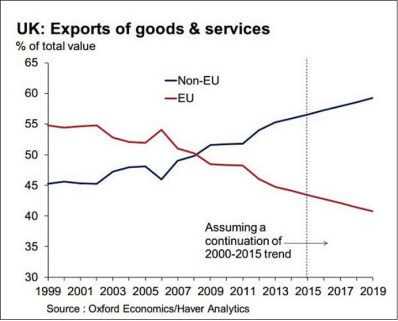
. . .  .and as far as UK exports are concerned, the EU represents a market steadily declining in importance. 

Trend EU vs non-EU exports goods & services 1999-2019

Politically, the EU is beset with problems that pose a direct, almost existential, threat to its integrationist philosophy. The amount of central bank-held Euro-debt is deemed unsustainable. Its Mediterranean migrant crisis remains intractable, and unsolved, with Italy now taking matters into its own hands.

In country after country, voters are electing openly anti-EU parties, exasperated at how its supranationalist anti-democracy ignores or dismisses their legitimate concerns about unemployment and economic imbalances attributable to the Euro, the links between uncontrolled mass-immigration, crime, security, and Islamist terrorism, and issues of culture and identity. Yet it responds largely by hectoring and bullying.

Finally – and this ought to be painfully obvious by now, even to the most partisan Remain-voting, Brexit-regretting EU-phile – despite its multi-fronted crises, Brussels has zero interest in negotiating, in good faith, a mutually-beneficial separation settlement, as a precursor to a comprehensive agreement on the future relationship between itself and a former members who, despite withdrawal, nonetheless wishes to continue a close, but non-political arm’s-length, relationship with it.

The EU’s aim, explicity-stated, is to punish Britain, even at the cost of inflicting damage on itself or its member=states, for having the audacity to abandon the Project, so as to deter others from following a similar path.

And yet, faced with all this evidence, a majority of the ‘Liberal’-Elite would rejoice should the democratic will be overthrown and Brexit either not happen at all, or happen only cosmetically, or be so mishandled as to bring about a re-joining in a few years’ time, even on punitive terms.

Why? To expand this article’s title, just why are the ‘Liberal’-Elite so near-universally and instinctively EU-phile?

Once, I thought that EU devotees, though wrong, at least had an honourable viewpoint, in that they felt the economic, trade and employment benefits of membership outweighed its democratic deficit. I gradually came to realise, however, that, for many, their EU-philia was not despite its democratic deficit, but actually because of it.

The past two years have strengthened that conviction. My theory, for what it’s worth, is that their EU-philia, despite their protestations to the contrary, isn’t driven by concerns about the economy, trade and jobs, but by something both deeper and darker: an atavistic aversion to mass democracy itself.

First, it’s a convenient cultural signifier: a means of virtue-signalling, if you like, that they, unlike the unsophisticated, and mostly non-metropolitan, masses, are open, internationalist, cosmopolitan, ‘tolerant’, and ‘liberal’. In view of the experience of the last two years, many may find those latter two claims to be debatable, to say the least. 

Secondly, it seems increasingly hard to deny that, for so many, the overriding attraction of EU membership is that it enables as much politics as possible to be made immune from the need for popular consent – to be put beyond the reach of the capricious domestic democratic process and the electorate whose views they not only by-and-large do not share, but for whom they actively feel contempt.

If my theory is correct, then this has implications for the reform of our post-Brexit Parliament and legislature. To repatriate currently EU-decided politics to the United Kingdom, only to vest it in the same Parliament which over 45 years eagerly gave it away, and place it in the custody of MPs approximately 70% of whom actually hold a low opinion of the masses, and, by extension, of mass democracy, especially when it delivers an outcome unwelcome to them, would be unthinkable, and a hollow victory indeed.

Thoroughly agree with this article? Vehemently disagree with it?

Scroll down to leave a comment

And follow A Libertarian Rebel on Twitter

Tory Armageddon or Tory Anti-Climax?

Will today’s House of Commons debate votes on the House of Lords’ wrecking-amendments to the EU Withdrawal Bill prove to be Tory Armageddon or anti-climax?

This article was first published at The Conservative Woman on Tuesday 12 June 2018. 

Theresa May’s default instinct is procrastination. Her entire conduct of the Brexit negotiations has been characterised by deferral and delay, rather than decision. Today, however, comes the confrontation she can duck no longer. The House of Lords wrecking amendments to the EU Withdrawal Bill come back to the House of Commons.

We can, however, totally dismiss the arguments of Unreconciled Remainers like Chukka Umunna and Gina Miller that for the Government to require all 15 Lords’ amendments to be debated and voted on in just 12 hours or so over the next 2 days is somehow an affront to democracy.

It takes either a breathtaking degree of chutzpah, or a staggering lack of self-awareness, for Umunna and Miller to (presumably) believe that their own blatant attempt to overturn the democratic decision of 17.4 million voters and stop Brexit somehow isn’t a far greater affront to democracy, but leave that to one side.

In 1999, the Blair Government, of which Umunna was, and Miller I suspect would have been, an enthusiastic supporter, made the Commons consider no fewer than 820 Lords’ amendments to the Greater London Authority Bill in just 5 hours.  The Remainers’ faux-outrage over 15 amendments in 12 hours or so over 2 days is risible, as well as being nauseatingly hypocritical.

Before her misguided decision to call last year’s election, May probably had the numbers, including the DUP and Labour Leavers committed to respecting the democratic outcome of the EU Referendum rather than Corbynite game-playing, to defeat the amendments and send the Bill back unamended.

Now, however, with May’s majority vanished, the picture looks very different, even with the votes of the DUP and those principled Labour Leavers. The rebellion by unrepentantly pro-EU, anti-Brexit Tory backbenchers – notwithstanding that, under a year ago, every single one of them stood for Parliament on a Party manifesto pledging to implement Brexit and leave both the Customs Union and Single Market – is now well into double figures.

It was boosted by Justine Greening’s refusal to accept a (justified) demotion in May’s Cabinet reshuffle, and by the (also justified) resignation of Amber Rudd as Home Secretary, because both have promptly joined the Soubry and Morgan claque in what is known as Remoaner Corner. Just in the past few days, former Environment Minister Caroline Spelman has thrown in her lot with them.

So attention has now reportedly turned to differentiating the 15 Lords’ amendments into Green, Amber and Red categories, in order of acceptabilty. Fine in theory, but most of the Red Amendments on which the Government might actually be inclined to dig in its heels, like continuing Customs Union and/or Single Market membership, or continued ECJ judicial supremacy, are precisely those on which the pro-EU Left in Parliament and the Tory anti-Brexit rebels intend to inflict a defeat on the Government, because they amount to their aim of a soft-as-mush Brexit-In-Name-Only.

As if that wasn’t enough, as a prelude the past few days have been dominated by David Davis’ (latest) implied threat to resign over the Northern Ireland backstop. At the time of writing, opinion is divided, depending on whom one chooses to believe, on whether Davis has once again backed down on a fudge, or May has capitulated by agreeing to time-limit the backstop, however nebulously.

It’s only a few days ago that comment and analysis was predicated on the forthcoming EU Summit on 28-29 June making the Parliamentary and Cabinet arithmetic difficult afterwards. Intriguingly, and as a reflection of how fast-changing this whole situation is, it’s now at least arguable that this judgment needs to be reversed.

Firstly, if May really has conceded a time-limited Northern Ireland backstop, (and even if she doesn’t resile from her concession in the face of unrelenting pressure from the viscerally pro-Remain mandarins of the FCO and Cabinet Office), it’s almost certain that Barnier and his Brussels colleagues will reject it out of hand at that EU Summit. Their aim is to exploit the UK/EU border in Ireland to stop Brexit.

Secondly, if she goes to that Summit on the back of several Parliamentary defeats brought about essentially by her own disloyal backbenchers, her position will be severely weakened. It’s the Parliamentary arithmetic that will make the EU Summit difficult, not the other way round.

Paradoxically, May’s, and Brexit’s, lifeline could be to refer back to that unnecessary 2017 General Election. It did at least have one advantage, of making the vast majority of her Remain-voting MPs face their constituents and promise to implement the Referendum result. She should have no qualms about reminding the rebels of that, and then make every Amendment vote a Vote of Confidence, in effect threatening them with another election.

But if she won’t, then she must go. For some time the political blogosphere hasn’t been reticent in calling for May to be ousted, not even necessarily to save Brexit, but because of her manifest inadequacies both as a Prime Minister and Party Leader – I myself called for her to go at TCW on 29 January this year –  but now the heavyweight commentators are even joining in, economist and Conservative Andrew Lilico’s devastating indictment of her at Reaction last week being but one example.

But her potential Brexiteer ousters, it appears, lack the courage to back their words with deeds. Like so many of their predecessors, it will be their fate to be remembered, not as Tory statesmen who upheld democracy, but Party hacks who, when it came to the crunch, put party before country. Anti-Climax seems far more likely than Armageddon to be today’s outcome.

Thoroughly agree with this article? Vehemently disagree with it?

Scroll down to leave a comment

And follow A Libertarian Rebel on Twitter
The De-Legitimisation of Democracy and the Demos

The reaction of the pro-EU Remain campaign to Leave’s victory in the 2016 EU Referendum has been an attempt to de-legitimise the Demos and even Democracy itself

Note: this is the long (and updated) version of an article first published at The Conservative Woman on Monday 08 January 2018

The EU Referendum was a seminal event in our political history for many reasons. One of them, however, was unique in modern times. In reaction to their defeat, the losing side’s leaders unleashed their inner contempt, not just for the result, but for the mass electorate, and arguably even for democracy itself.

The several distinct strands discernible in the Ultra-Remainers’ interpretation of the Referendum result were, and are, all intended to justify either ignoring, diluting, or overturning, it. That the flaws in them are so self-evident and so easily debunked, however, highlights their desperation.

‘The Leave vote was driven by racism and xenophobia, to stop all immigration’.

This first, knee-jerk, reaction has endured, an enthusiastic adherent being the habitually self-unaware Owen Jones, who in effect repeated it approvingly in a blog criticising the Remain-Elite’s demonisation of Leave voters (yes, really!). But, apart from the logical fallacy that wanting to stop all immigration (a minority view even among Hard-Leavers) is not prima facie evidence of either racism or xenophobia, how the accusation explains the large number of BME and Eastern European origin Leave voters is unclear.

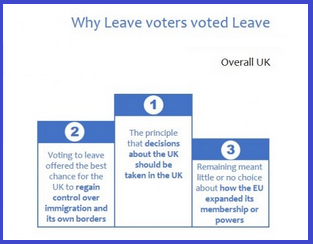
The definitive rebuttal, though, emerged from Lord Ashcroft’s polling which found the majority of Leave voters voted on ‘Sovereignty and Democracy – the principle that decisions about the UK should be taken in the UK’. Even the second choice – ‘for the UK to regain control over immigration and its own borders’ – is about control, not prohibition: the usual Remainer accusation of “to stop all immigration” is therefore exposed as just anti-Leaver prejudice.

‘Leave voters were predominantly un-educated, ‘low-information’ people, who didn’t know what they were voting for’

Even discounting its inherent repugnance – when did a vote’s democratic validity under universal adult franchise suddenly become conditional on educational or knowledge qualifications defined post-facto by the losing side? – this meme’s central tenet, that mere possession of any old university degree makes your opinions and vote valid, but those of your not similarly-endowed fellow-voters invalid, is risibly false. Just to give one example, 55% of graduates, apparently, believe that both poverty and income inequality are increasing, when in fact the exact opposite is true.

‘The Leave vote caused a spike in hate crime’

This imprecation was made possible at all only by the balefully-imprecise definition of ‘hate-crime’, an ‘offence’ requiring neither complaint, victim, evidence nor corroboration to be accepted and recorded. Rightly described by Brendan O’Neill as ‘the most cynical, politically motivated crime panic in memory’, and ‘the invention of a crime epidemic to the cynical, political end of defaming Brexit as hateful and dangerous’, it has now largely subsided, leaving its levellers looking especially malevolent, or foolish, or both.

‘The Leave vote was secured by Russian influence and bots on Twitter’

With this allegation, Remainer desperation descended into fantasy. It was rapidly demolished, not least by academic Matthew Goodwin’s comprehensive dismissal of the so-called ‘evidence’ for it. In summary, approximately 86 per cent of the allegedly Brexit-“influential” tweets, which themselves represented only 15 per cent the total analysed, were actually sent after the polls had closed, and fewer than 1 per cent of voters polled cited Twitter as their preferred information source.

‘They didn’t vote to be poorer, or to leave the Single market and Customs Union’

Actually, they did. The repeated insistence by Cameron and Osborne alone that a Leave vote involved quitting both the EU’s principal economic institutions meant that no-one could be unaware of those consequences of their Leave vote. The prominence given it, plus the findings of the Ashcroft poll, suggests Leave voters recognised there were economic risks in leaving, yet were still prepared to risk a temporary financial downside for themselves to ensure their children’s future in an independent,`self-governing democracy.

Varied as all the above reactions are, they do have one common factor which appears both unprecedented in recent history, and very disturbing. Albeit in different ways, they all seek, not merely to condemn or oppose the Leave vote, but specifically to de-legitimise it, as justification for ignoring, negating or overturning it. As historian Robert Tombs puts it: ‘Never in modern times has there been such an overt and even contemptuous attempt to deny the legitimacy of a popular vote.’

Previous unexpected election outcomes produced shock, as in 1992, or noisy street demonstrations by the losers, as in 2015: but I cannot recall a previous vote in modern UK political history after which the losers have embarked on a blatant campaign to invalidate the votes of the winners, and to such an extent as to challenge even the legitimacy of democracy itself.

Why? Well, those of what we can accurately label the Ultra-Remainer mindset, even carried over into regular general elections, have not been on the losing side in any election for approximately 25 years. After 1992, they got, in succession, Blair, Brown and Cameron: in effect a continuum of Blairite government reflecting their politics, right up until its abrupt repudiation by 17.4 million voters on 23rd June 2016.

For them, losing is a new experience, one which they don’t like, and can’t handle. And the underlying reason is that, as they’ve now shown and continue to show, they actually hold a low opinion of the masses, and, by extension, of mass democracy, especially when it delivers an outcome unwelcome to them.

It’s clear that, for so many, the overriding attraction of EU membership is because it enables as much politics as possible to be made immune from the need for popular consent – to be put beyond the reach of the capricious domestic democratic process and the electorate whose views they not only by-and-large do not share, but for whom they actively feel contempt.

In a way, we should thank them. Their Referendum-denying, insult-hurling, anti-Brexit demonisation and attempted de-legitimisation of 17.4 million people’s votes has revealed starkly the sheer extent to which this country’s elites tolerate mass democracy only for as long as it produces the results they want. When it doesn’t, they’re viscerally eager either to disparage it or suspend it.

And they are still disproportionately both influential and vocal, in politics, government, the media, academia, and big-business. As we go into 2018, Brexit is still not certain, despite being the largest vote for any single policy in British political history. It’s starting to feel as if democracy itself is dangling by a very tenuous thread.

Thoroughly agree with this article? Vehemently disagree with it?

Scroll down to leave a comment

And follow A Libertarian Rebel on Twitter
We Must Re-Create The Brexit Movement

The Brexit Movement, prematurely wound down after the EU Referendum, needs re-creating to continue making the case for it, so as to keep pressure on the Government to deliver it.

Note: this is the long (and updated) version of an article first published at The Conservative Woman on Friday 17th November 2017.

Like many ConWom readers, I suspect, I spent the early dawn hours of Friday 24 June 2016 in a state of ecstatic semi-euphoria that the British people had ignored the pro-EU hectoring of the massed ranks of the New Establishment and their globalist backers, and had voted to leave the EU. It didn’t last very long.

Such was the furious reaction of the Remainer-Elites and their compliant media courtiers to their unexpected defeat that, before the day was out, I’d become convinced that while we had won the Referendum battle, we certainly hadn’t yet won the war, and that the celebrations of some, on the assumption that all that was needed to achieve Brexit had been done, were hubristic and perilously premature.

I even tweeted as much, as this selection from my Twitter timeline between early that Friday morning and late that evening shows (with apologies for the profanities…)

But sadly, this is precisely what happened after the Referendum. The Vote Leave campaign wound down: its principal Conservative politicians dived headlong into the internecine strife within their party from which its Remainers emerged predominant, while its successful CEO, Matthew Elliott, decamped to the Legatum Institute.

On the Leave-EU side of the Brexit movement, an insufferably bombastic and complacent Nigel Farage resigned as leader of UKIP to forge a new career in the media as the man who won the Brexit that hasn’t occurred yet. UKIP meanwhile has collapsed into virtual irrelevance after the two most credible replacements were seen off by the residual Farageistes, is now led by a non-entity, and is near-invisible. 

A couple of pro-Brexit campaign groups persist, but active mainly on social-media only. One of them, connected to the Leave-EU movement, has a website where it’s comparatively rare that the space taken up by the text of a blogpost actually exceeds the space taken up by images accompanying it. 

In effect, the loose coalition that delivered that historic vote by 17.4 million people to retrieve their sovereign nation-state popular democracy from supranational unaccountable-elite technocracy, and the communications infrastructure that made it possible, has all but dissolved.

It’s this article’s contention that this has been a catastrophic error: that developments,  not only since the Referendum generally but specificially more recently, are placing Brexit in ever-greater jeopardy: and that the Brexit movement needs to be re-constituted and go back on to a war footing, to fight for what the British people voted for, and even contest if need be the second referendum which I personally believe to be the Unreconciled Remainers’ end-objective.

Although the Leave coalition subsided, the Remain campaign never ceased. Unlike Vote Leave and Leave-EU, the pro-Remain Open Britain campaign has never wound down, and continues to make the anti-Brexit case.

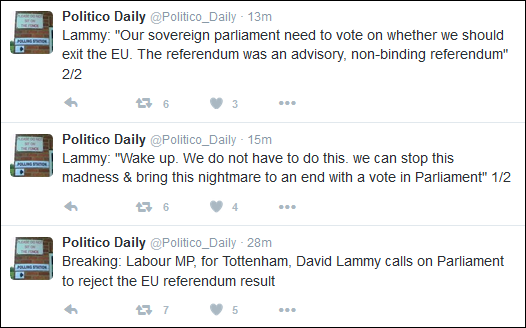
Readers will recall the ugly post-Referendum orgy of anger and hatred directed by ‘liberal’ Remainers and their cheerleaders at Leave voters, the constant attempts by the academic and judicial elite to delegitimise the Referendum result, and the sometimes near-hysterical anti-democratic polemic of, to name only two egregious but typical examples, the philosopher A C Grayling and Labour MP David Lammy, so I need not reiterate them.

It intensified once again during the Gina Miller litigation designed to facilitate a majority pro-Remain House of Commons vetoing the Government’s Article 50 notification. But it lessened somewhat after Parliament voted by 494 votes to 122 to authorise the triggering of Article 50 by 31st March, and matters reached a sort of uneasy equilibrium.

But then came May’s ill-advised, mismanaged General Election. When she and the Conservatives were returned drastically weakened, the Continuity-Remain movement was re-invigorated and its political, civil service, media, academic and judicial channels have visibly stepped up their campaigning by several levels of magnitude. They’re making the running: they look increasingly confident that Brexit really can be stopped and the Referendum reversed, and a majority-Remain Government seems at best half-hearted in response.

Now the fight is intensifying even more with the tortuous passage through Parliament of the EU Withdrawal Bill. The parties of the pro-EU Left have made clear their intention to conduct a guerilla war against it, voting against even the clause setting out its overall purpose, aided by 15 or more Unreconciled-Remainer rebels on the Tory back benches, some with considerably less honourable motivations than others.

In passing, let’s dismiss the disingenuous platitudes so many of these utter about wishing to do no more than “improve” the Bill. In many cases, it’s self-serving cant. They want to keep us in the Single Market and Customs Union, and under the jurisdiction of the European Court of Justice,  not out of genuine concern for our post-Brexit trade prospects or the position of UK-resident EU nationals, but to engineer either a Brexit-in-name-only, or one which is so close to EU membership that re-joining would seem like a logical step.

Many remain unreconstructed supporters of the EU Project and Britain’s submersion in it. It’s long been clear that, for them, the prime attraction of EU membership lies in is its very anti-democracy: it enables them to put as much policy-making and as many decisions as possible beyond the reach of what they see as the capricious domestic democratic process and an electorate whose views they by-and-large do not share and for whom they harbour a visceral contempt.

If some of the amendments being proposed already seem very technical and legalistic, be prepared: worse is yet to come. In this very detailed long-read published on 12th November at Brexit Central, Professor David Campbell of Lancaster University sets out how the legislative process of Brexit could become almost impenetrably bogged down in the morass of a quasi-constitutional conflict over the supremacy of the Judiciary, or Parliament.

It doesn’t look impossible that it could establish the supremacy of the Judiciary over that of Parliament. Just think what that would do to the prospects of Brexit happening at all. That partly explains, in my view why such an ardent anti-Brexiteer as Labour’s Keir Starmer is so keen to maintain the jurisdiction in post-Brexit Britain of the European Court of Justice.

Professor Campbell concludes that we may need an Assertion Of Parliamentary Sovereignty Act to make Brexit tamper-proof from judicial-activist usurpation of the powers of Parliament to implement the express instruction of the electorate.

If the EU Withdrawal Bill is set to have a rocky passage through Parliament, imagine how difficult it would be for a minority Government to push legislation, whose effect would be to prevent the pro-Remain Judiciary from blocking Brexit on constitutional grounds, through a marginally pro-Remain Commons and a majority pro-Remain despite unelected Lords.

Another potential complication emerged on 14th November, with a European Court of Justice ruling that EU citizens who become British do not lose the right to bring a non-EU spouse from a non-EU country to live with them in the UK. The continuing post-Brexit application of ECJ human-rights rulings is figuring strongly in debate on the EU Withdrawal Bill, so this is a further area where continued pro-Brexit advocacy is lacking.

May herself arguably opened a new front in the anti-Brexit campaign with her speech to the Lord Mayor’s Banquet on Monday 13th November. Yes, it is possible to interpret her remarks on Russian interference in Western elections as a desperate ploy to divert attention from her domestic travails: but it’s also possible to interpret it as a fresh attempt to de-legitimise by association the entire Brexit vote, especially the evening before the EU Withdrawal Bill was re-introduced into Parliament, with every prospect of the Unreconciled Remainers on her own back benches determined to vote it down on any pretext?

The signs are ominous. The EU is refusing to move on to talks about a post-Brexit trade relationship unless its exorbitant financial demands are agreed. Each UK concession on these is banked, not reciprocated, and met with merely a request for a larger sum. On 20th November, it even had the temerity to demand in effect an EU veto on UK domestic tax, environmental and business-regulatory policy after Britain has left the EU.    

Its intransigence is being encouraged by a UK media overwhelmingly hostile to Brexit and resolved to paint it in the worst possible light. Sir Humphrey, for whom Britain’s EU membership has been axiomatic for 40 years and thinks Brexit a monumental folly of crude populism-appeasement, is dragging his feet.

The Government is being forced by its weakness and wafer-thin, DUP-dependent, majority into unwanted concessions. It’s conceding votes in Parliament on aspects of Brexit which, with the clear instruction delivered by the Referendum result, should no longer be in play at all. In these circumstances, that it might, to win a crucial vote, concede a second Referendum, either on the terms of our exit, or even on the decision itself to leave, can’t in my view be ruled out.

If that comes about, the Remainers will have achieved what has been their prime objective – and also the EU’s, for it has an unsavoury record of ignoring plebiscites with unwelcome outcomes and requiring electorates to vote again and again until they come up with the “right” answer.

And then what? Unlike Vote Leave and Leave-EU, the pro-Remain Open Britain campaign has never wound down, and continues to make the anti-Brexit case. Continuity-Remain could gear-up for a second EU Referendum comparatively quickly. The money would come flooding in.

It’s victory, though, would be far from a foregone conclusion. Since June 2016, the electorate has seen the EU moving faster towards ever-greater integration and centralisation in ways the Remainers denied were even being contemplated. It’s seen how so many of the scaremongering predictions of Project Fear failed to materialise. A second Referendum could be won with another Leave vote.

But not without a campaign organisation. Even without a second Referendum, Brexit feels in enough danger to justify the reconstitution of the Leave coalition, if only to continue to make the case it made so effectively in the first half of 2016, and hold the Government’s feet to the fire. The Brexit movement needs to be re-created.

Thoroughly agree with this article? Vehemently disagree with it?

Scroll down to leave a comment

And follow A Libertarian Rebel on Twitter

The People-In-Parliament

Unreconciled pro-Remain MPs cynically exploiting an interpretation of Parliamentary Sovereignty to try and negate the EU Referendum result have highlighted the urgency of radical post-Brexit Parliamentary reform

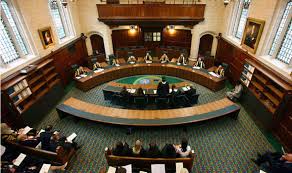
uk-supreme-courtThe Supreme Court decision in Miller – that the Government’s powers under Crown Prerogative did not include the power, despite the unequivocal popular mandate given it by the result of the EU Referendum, to issue notification under Article 50 of the Lisbon Treaty of Britain’s withdrawal from the European Union, so that a specific Act of Parliament was required – has re-activated the question of what Parliamentary Sovereignty actually means.

I was brought up to believe, and was in fact taught, that what the doctrine of Parliamentary Sovereignty expresses is the supremacy of Parliament over the Crown – that the Crown cannot arbitrarily compel the passing of laws or the raising of taxes without the consent of Parliament, but by extension also, therefore, without the consent of the people whom Parliament merely represents.

In other words, that Parliament is sovereign over the Crown, but not sovereign over the people, comprising as it does merely their temporarily-elected representatives.

Admittedly, the question is disputed by constitutional writers. Burgess suggests that this is indeed the case, and argues that, by asserting or assuming sovereignty over the people, successive Parliaments have exceeded their powers. Loughlin, on the other hand, suggests that Parliament is indeed supreme over the people, and infers that this is legitimised by freely-held, non-coercive elections under our system of representative, rather than direct, democracy.

I’ve always been uneasy with this latter interpretation: to me, it seems far too conducive to an elective dictatorship, able to act with impunity in defiance of the people’s expressed wishes. When we send MPs to Westminster, we are not relinquishing or transferring ownership of our democratic powers to them: we are merely lending them, and delegating temporary custody of them, to MPs until the next election – and nothing more. 

This has even more resonance when Parliament, without our approval, agrees to transfer power or jurisdiction over domestic policy matters to unelected, unaccountable supra-national bodies like the EU. Because our democratic powers as a people are only lent, not relinquished, to MPs, they do not become the property of a transient Government or those MPs to dilute or even cede to another polity, without our specific consent.

The Supreme Court’s ruling in Miller, however, making implementation of the clear popular mandate given the Government by the EU Referendum in effect subject to approval by Parliament, appeared to reinforce the interpretation that Parliament is supreme, not only over the Crown, but over the people also.

Crucially, however, that is certainly the way it has been gratefully interpreted over the past three days by very many anti-Brexit MPs in the current Parliament’s inbuilt near two-thirds to one-third pro-EU, pro-Remain majority: a pro-EU majority that stood in stark contrast to the UK electorate’s 52% to 48% vote to leave the EU, and which, translated into Parliamentary seats, has been calculated would produce a pro-Leave landslide.

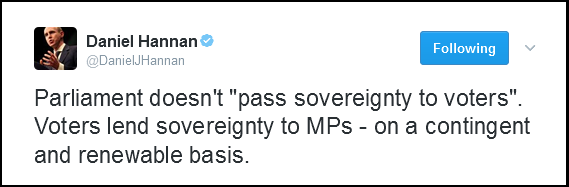
2017-02-07-hannan-on-parliamentary-sovereigntyWhen Parliament voted, by a factor of no less than 6:1, to hold the EU Referendum, what it did was to hand back to the British people, in relation to the specific issue of remaining in or leaving the EU, the powers that the British people had, once again, temporarily lent to it, via the 2015 General Election. Dan Hannan’s tweet above perhaps clarifies how.

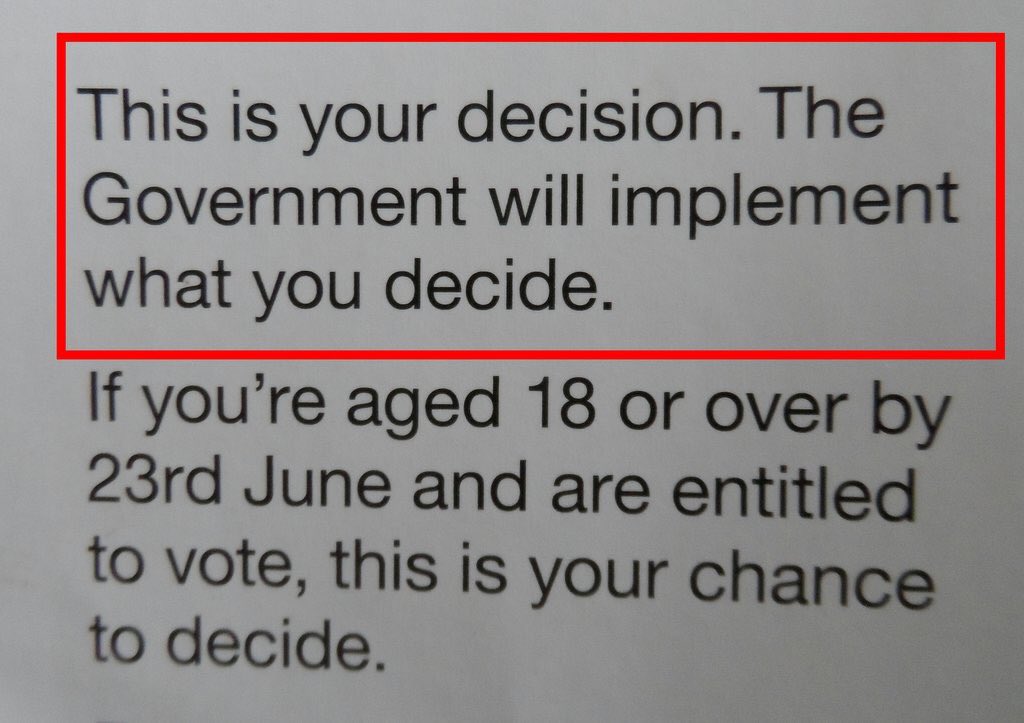
ref-leaflet-contract-with-the-votersFor this particular issue of Britain’s EU membership, Parliament gave back to the people the sovereignty which we temporarily lend it. It said, in effect: “this is for you to decide, not us on your behalf”. It even emphasised as much – “The Government will implement what you decide” – on its information leaflet.

And the decision of the British people, and its implied, consequent instruction to its elected Government, was clear and unmistakeable.

To have, therefore, seen diehard-Remain MPs trying over the past three days to confect and exploit a cynical, self-serving  misinterpretation and distortion of Parliamentary Sovereignty to mean Parliament supreme over the people, to further their own nakedly anti-Brexit aims in defiance of the democratic decision of the UK electorate which they voted by over 6:1 to confer on it, has been utterly nauseating.

We’ve seen unashamedly pro-EU MPs, who for years accepted torrents of EU legislation into the corpus of UK law with near-zero scrutiny, suddenly converted to the apparent necessity of line-by-line scrutiny of Brexit aims and negotiating strategy.

snp-mps-hoc-may-15We’ve seen Labour, LibDem and SNP MPs, supported by unreconciled Tory Remainers, proposing amendments to the Article 50 Bill which were blatant attempts to slow the Brexit process to a standstill: and making it clear that many want either not to leave the EU at all, or else remain in it in all but name.

We’ve seen the vast majority of Labour, LibDem and SNP MPs, again with support from unreconciled Tory-Remainers, making it abundantly plain that their wish to “scrutinise” the Government’s Brexit negotiating strategy is only to expose & weaken the Brexit negotiators’ hand, before negotiations start.

We’ve seen pro-EU MPs, who for years were so eager to give UK voters’ democratic powers away, now fighting hard to stop them coming back. Many of their disingenuous amendments clearly were mere devices to negate implementing the decision which Parliament gave to the electorate to make, and some of those pro-EU MPs could barely be bothered to conceal it.

We seen unreconciled pro-Remain MPs, one after the other, indulging in competitive hand-wringing over the post-Brexit plight of EU nationals currently in the UK. Their cynicism has been quite breathtaking: it’s easily ascertained that approximately 84% of EU nationals residing legally in the UK would not be affected one iota.

soubry-distraught-hoc-wed-07-feb-2017Their speeches were in effect re-fighting the EU Referendum itself, and re-running the combined Remain campaign’s Project Fear. They left no doubt that, for them, being pro-EU means being anti-democracy, and that the prospect of leaving the anti-democratic EU horrifies them.

It’s difficult to deny that, when Leave-ers voted on 23rd June 2016 to recover Parliamentary Sovereignty, what they meant was leaving the EU altogether – so that, in a Britain once more an independent, self-governing country from being outside the European Union, their laws & taxes would in future be decided by, and only by, the MPs they elected to Parliament, and by no-one else.

why-people-voted-leave-2In other words, that Parliament would be sovereign over any foreign legislature in the determining the laws they have to obey and the taxes they have to pay. Remember, both the Government and Remain campaigns to stay in the EU had been totally unequivocal in warning that a Leave vote meant exactly that – leave completely.

I suspect what they did not mean by recovering Parliamentary Sovereignty was Remainer MPs interpreting it instead as Parliament in effect deciding whether the UK is to leave the EU at all. Yet it’s been obvious from the last three days’ Article 50 Bill debates that that’s how the Diehard-Remainers see it, and have tried to interpret it. Their conduct has been nothing short of pro-EU anti-democracy chicanery.

So what implications does this have for the future of Parliament, and our democratic politics, once Brexit has been achieved?

One consequential necessity above all, I’d contend, has long been pre-eminent: that, having succeeded in retrieving and repatriating our democratic sovereignty, we cannot risk merely entrusting it once again to the same body of MPs who for 40 years eagerly and arguably illegitimately gave it away without our consent in the first place: at least not without imposing some very robust limits on their powers in that respect.

They have shown that, quite simply, they cannot be trusted. The reaction of too many to the, for them, unwelcome Referendum result has betrayed their disdainful attitude towards their electorate.

Many remain unreconstructed advocates of the EU Project: it’s been clear that, for so many, the prime attraction of EU membership is that it enables them to fulfil a visceral desire to put as much policy-making as possible beyond the reach of what they see as the capricious domestic democratic process and an electorate whose views they by-and-large do not share or even find repugnant.

We cannot assume that a future Parliament, especially a left-leaning, residually pro-EU one, would not surreptitiously resume the powers-ceding process of the last 40 years all over again. Their hands, in short, need to be tied.

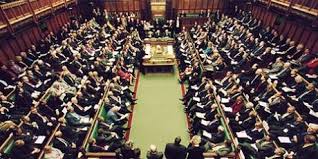
commons-chamber-normalSo we must strengthen the post Brexit Parliament’s democratic accountability to the electorate. To more of a People’s Democracy that makes legislature and executive work, not in the interests of the Establishment cartel, but in the interests of the people.

We need, and urgently, a proper Recall Procedure, in the hands of voters. The Bill presented in the last Parliament to allow a minimum percentage of constituents to recall an errant MP to face re-election was voted down: instead, Members decreed that only a committee of MPs was fit to decide whether one of their fellow-MPs had misbehaved sufficiently to have to account to his electorate – his constituents, impliedly, were not . So much for “trust the people”. Real voter Recall is a cause going by default.

We need Open Primaries for candidate selection. We may no longer be in the days of the Cameroon Cuties’ A-List, and Labour’s infamous all-women shortlists seem to have fallen out of favour: but with the occasional exception, none of the main parties seems at all keen to open up the candidacy process and make it more accessible, less subject to capture or manipulation by party hierarchies, and more transparent. The case for Open Primaries is strong, but not being robustly made.

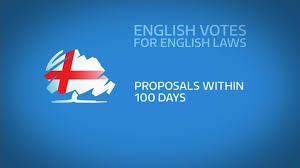
evelA fairer constitutional settlement for England, shamefully neglected in the rush to confer domestic powers on the devolved assemblies, is long overdue: but the issue of an exclusively English Parliament, or English Votes for English Laws, has retreated towards the back burner.

Yet by re-advancing it, English MPs would rightly be re-asserting domestically the fundamental principle on which the EU Referendum itself was fought and won: that the laws governing the citizens of a discrete polity can legitimately be those, and only those, made by, and only by, the representatives directly elected by the citizens of that polity, and whom they can remove from office via the ballot-box at the next election.

For national-level democratic participation, we have to rely on a once-in-5-years cross-marking exercise, based on manifesto commitments which few expect their parties to honour, once the inconvenience of an election is out of the way. But – in an age when we can book a holiday with a few mouse-clicks, or apply for a university course with a screen-touch, why should this be?

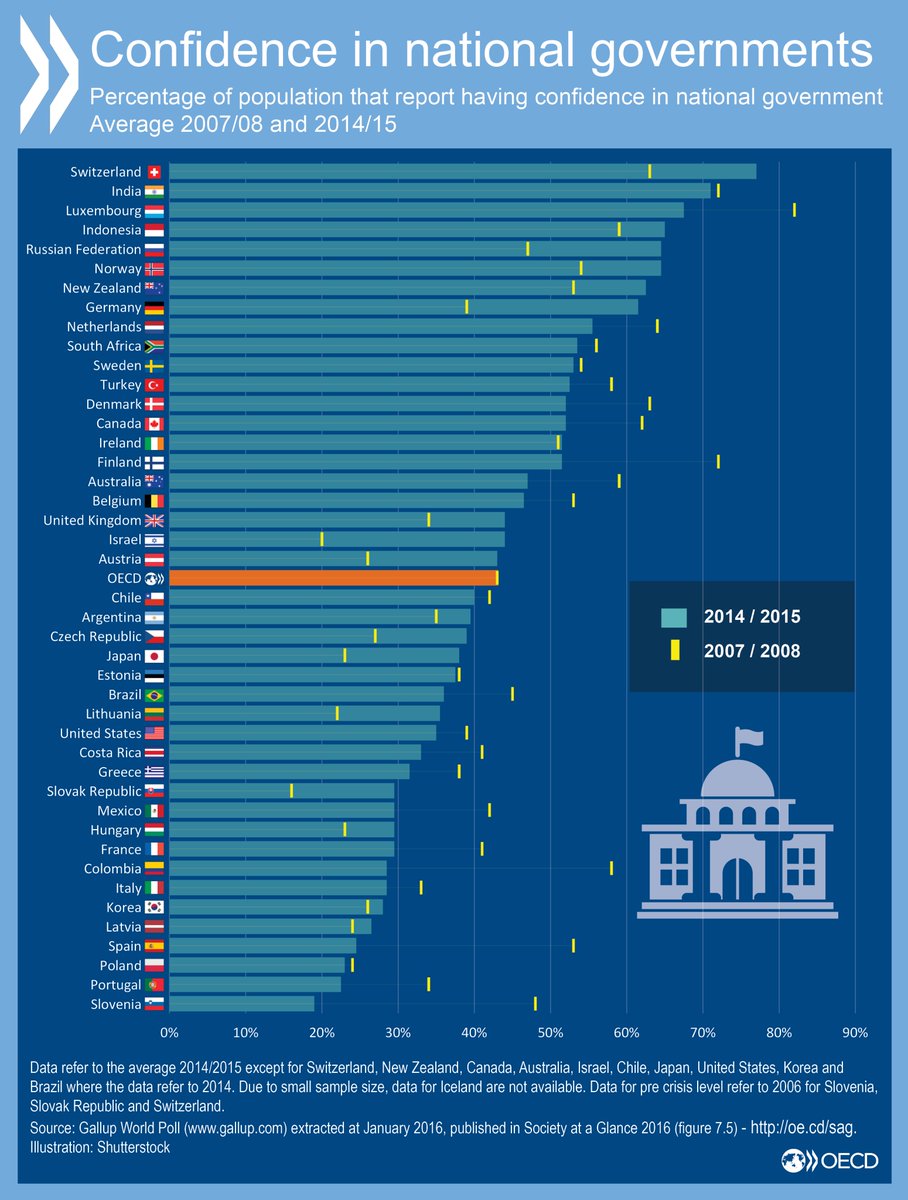
confidence-in-govt-switz-topThe Swiss manage successfully to hold referendums on issues other than major constitutional questions like their voting system or EU membership. It’s no coincidence, to my mind, that the Swiss, who have the most direct say in their government, via localisation & frequent referendums, express the highest confidence in their government and regularly show highest public-engagement in politics. We can achieve the same. We need more referendums, not fewer.

The political-class, of course, hates them. They’re “divisive”, they’re unpredictable, they take control of campaign messaging away from party machines, and, worst of all from their point of view, referendums let voters take control of a single issue outside the 4/5-year election sequence when an entire manifesto is voted on.

There can be few better reasons for having more referendums than a demonstrably unrepresentative, voter-averse, political class being opposed to them. If we were more accustomed to using them as an instrument of democratic consent, they’d be far less “divisive”.      

Whatever method of future democratic engagement we adopt, we need, too, to eliminate the loopholes, if not downright electoral fraud, made possible from now rampant abuse of the postal (or virtually proxy) voting system. There have been too many instances reported of, as just one example, multiple postal votes per household, to continue leaving glaring abuses unchecked. A return to the previous very tight criteria for postal voting eligibility, plus a requirement for photographic ID at polling booths, is necessary if the democratic process is not to be further subverted.         

We need, also, enshrined in law, an absolute bar on the transfer away to any other body, whether domestic or international, of any part of the democratic sovereignty temporarily and conditionally vested in Parliament by the electorate. Remember, it’s not just to overseas or supranational unelected, unaccountable institutions that our democratic powers have been transferred – think how much policy-making has been put beyond the reach of democratic disapproval or change over the years by being delegated to quangos or semi-autonomous government agencies insulated from the democratic process.

The Coalition purported to remedy this with its 2011 European Union Act, essentially requiring a plebiscite on any further significant transfer of powers from Westminster to Brussels. Crucially, though, it largely left to Cabinet discretion what actually constituted a significant transfer of powers which would trigger a referendum. It was basically a sham, designed principally to head off demands from a growing-Eurosceptic Conservative Party and public for an EU Referendum while in coalition with the fanatically pro-EU, referendum-averse LibDems. We need a new law which is far more prescriptive.

The EU Referendum and its aftermath – especially the disconnect it revealed between, on the one hand, an electorate the majority of which is opposed to both EU membership and continuing uncontrolled mass immigration, and on the other, a Parliament largely in favour of both – has dramatically exposed how the traditional model of representative democracy is no longer working, in that, patently, it increasingly fails to represent. And as representative democracy’s disconnect between the views of rulers and ruled grows more and more apparent to more and more people, dissatisfaction with it will only grow.

The current anti-politicians (but NB not anti-politics) sentiment isn’t a mere passing phase. It augurs a permanent change in the relationship between rulers and ruled, to one where the balance between representative and direct democracy shifts more towards the latter.

That’s why, after Brexit, radical Parliamentary reform is needed to make MPs more accountable to their electorates, and ensure they can never again give away democratic powers which, because they are merely custodians of them our our behalf, are not theirs to give.

Thoroughly agree with this article? Vehemently disagree with it?

Scroll down to leave a comment

Follow A Libertarian Rebel on Twitter

Delicious Save this on Delicious

Oikophobia Unleashed

Brexit then Trump has caused hitherto-muted ‘Liberal’ contempt for the masses to erupt unconstrained

A week may be a long time in politics: but the 4½-month period between late-June and mid-November seems to have gone by in a flash.

Because, between the aftermaths of the two political earthquakes represented by the UK electorate’s vote for Brexit on 23rd June and the US electorate’s vote for Trump on 8th November, the chorus of Left-‘Liberal’ anger, objection, complaint and condemnation has been both continuous in frequency and unchanging in content.

A word on semantics. I habitually use “Left-‘Liberal'” for two reasons: the “Left” to distinguish it from the Classical-Liberalism to which it now bears hardly any relation, and the quotes around ‘Liberal’ to convey that its truly ‘liberal’ components are harder to detect. In US, and increasingly now in UK, usage, ‘Liberal’ actually means Left-‘Liberal’: so the remainder of this piece will use it as such.

‘Liberal’ opinion would always have been anti-Brexit. It prefers unaccountable, democracy-bypassing supranational institutions to the democratic sovereign nation-state: it favours unfettered immigration rather than even mildly-controlled borders: it supports elites-benefiting crony-corporatism over genuinely competitive markets: and it would rather single-regulatory-area trading blocs than free trade.

times-frontpage-wed-15jun16-osborne-threats-brexit‘Liberal’-elite received-opinion, anti nation-state and globalist, overwhelmingly informed the anti-Brexit argument. It was all-pervasive, from Government through the plethora of acronymed organisations to the Remain campaign itself, and all echoed faithfully by their largely equally-‘Liberal’ media amen-corner. So its palpably-traumatic shock when 52% of Referendum voters ignored or rejected its pro-EU exhortations, scaremongering and pressure, and voted instead to Leave, was at least predictable.

Less predictable, however – although, as we’ll see, perhaps not entirely – was the volume and tenor of the vilification heaped on the 52% who had shown the temerity to ignore the instructions of their self-assumed intellectual and cultural superiors, and vote instead for economic and political self-determination.

They were not merely wrong, ran the ‘Liberal’ narrative, disseminated via innumerable furious and vitriolic denunciations in the visual, print and online media. They, especially the swathes of working and middle-class voters outside the M25 who voted Leave in droves, had voted the way they had because they were perverse, racist (pick any “-ist” you like, really), ignorant, xenophobic, and – favourite of all – “uneducated”. The Referendum, they argued, should be ignored, and the question re-put

Moving from the particular to the general, democracy itself was soon identified and duly arraigned as the alternative culprit. The Referendum wasn’t even about EU membership at all, it was claimed, but about something else entirely. So Cameron, went this theme, had been wrong to concede something so unpredictable as a referendum at all: the arguments were too complex for the great majority of the voting public to understand, let alone decide on: why, perhaps even mass democracy itself was a flawed concept, seeing that at least half of the voters were plainly cerebrally-challenged, and manifestly too ill-equipped intellectually to participate in it.

b-oneill-rage-of-the-elitist-campMany were surprised by the unabashedly-articulated virulence. But not all – more astute commentators noted that the reaction was more a case of the mask slipping. The reflex was new, not in substance, but only in the extent to which ‘Liberal’ opinion no longer felt any constraint or reluctance about expressing it so clearly and openly.

Among the affluent, mainly-metropolitan, upper-middle-class, educated, intellectual and cultural Left, a faux-solicitude for the masses going hand-in-hand with a visceral revulsion for them has a long and unattractive history. One could perhaps cite as examples the early Fabians, or that epitome of Bloomsbury disdain Virginia Woolf: but suffice it to refer to that George Orwell quote from The Lion And The Unicorn with which so many are so familiar:

“In intention, at any rate, the English intelligentsia are Europeanised. 
They take their cookery from Paris and their opinions from Moscow. In the 
general patriotism of the country they form a sort of island of dissident 
thought. England is perhaps the only great country whose intellectuals 
are ashamed of their own nationality. In left-wing circles it is always 
felt that there is something slightly disgraceful in being an Englishman 
and that it is a duty to snigger at every English institution, from horse 
racing to suet puddings. It is a strange fact, but it is unquestionably 
true that almost any English intellectual would feel more ashamed of 
standing to attention during ‘God save the King’ than of stealing from a 
poor box. All through the critical years many left-wingers were chipping 
away at English morale, trying to spread an outlook that was sometimes 
squashily pacifist, sometimes violently pro-Russian, but always 
anti-British.”

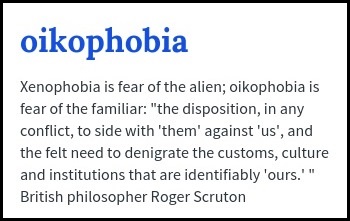
scruton-on-oikophobiaThe philosopher Roger Scruton deploys what I still consider by far the most descriptive term for the phenomenon of mainly metropolitan ‘Liberals’ consumed by contempt for the nation & its white working and middle classes. He calls it Oikophobia, from the Greek oikos, meaning home: a repudiation and irrational fear of, even hatred of, one’s own nation, heritage, traditional culture and people.  

He went on to amplify it in his magisterial speech entitled “Immigration, Multiculturalism and the Need to Defend the Nation-State”, delivered – with a prescience that in retrospect one can only marvel at – on 23rd June 2006, exactly 10 years to the day before our own Referendum Day. This is the passage that stands out:

scruton-on-oikophobia-2

That rampant ‘Liberal’ oikophobia, aimed at the Brexit-voting classes, whatever their socio-economic status and irrespective of their reasons, has scarcely diminished since its post-23/6 eruption.

why-people-voted-leave-2In vain do its targets point out that, far from being a vote by the allegedly prejudiced, hatred-filled, “xenophobic”, “uneducated” mob, 53% of those voting Leave gave as their reasons the fundamental issue of sovereignty and democracy: the principle – clearly anathema to sophisticated ‘Liberals’ – that decisions about the UK should be taken by, and in, the UK.

As a usually very non-political friend put it to me: “I voted Leave because I want my kids to grow up and live in a society where the taxes they have to pay, and the laws they have to obey, are decided by, and only by, politicians who they can elect and throw out, and by no-one else“.

It’s hard to better this as a simple summary of the Brexit case, and I’ve unashamedly borrowed it: but apparently it establishes beyond doubt millions’ racism, xenophobia, hatred, lack of sophistication, stupidity, and every other conceivable moral failing sufficient to consign them in ‘Liberal’ opinion to beyond the Pale of respectable society.

Then, just one week ago, a second cruise missile tore into the ‘Liberal’ citadel and detonated. Confounding the instructions, predictions (and, let’s face it, the heartfelt desires) of virtually every TV outlet, pollster, psephologist, media-pundit and cultural-commentariat apparatchik in the USA and beyond, the American voting system spurned the robotic, compromised, shop-soiled doyenne of the politically-corrrect, globalist ‘Liberal’ Establishment in favour of its ultimate ogre, Donald Trump. ‘Liberal’ opinion reeled in shock, denial, anger, and then exploded in incandescent almost hysterical, fury.

mount-st-helens-eruptionTo borrow a metaphor from volcanology: if Brexit 23/6 was the 20 March 1980 earthquake that created the bulge of sub-surface magma, visibly growing daily, on the north side of Washington State’s Mount St Helens, then Trump 8/11 was the 18 May 1980 rapid-succession earthquake, landslide and lateral blast that blew it apart and triggered the volcano’s eruption. The ensuing pyroclastic flow of ‘Liberal’ rage, frustration, hatred, bile, vituperation and contempt for the voters who delivered the dual earthquakes has both intensified and continued ever since, and it shows no sign of abating.

Just as in its post-Brexit phase, disparagement, firstly of the electorate and then secondly of democracy itself, are ‘Liberal’ opinion’s both default reactions and predominant responses.

Voters went for Trump, ‘Liberals’ insist, because they share his alleged misogyny (overlooking that 53% of white women voters and 43% of all women voters voted for him, and that among women without a college degree, he was 20% ahead).

The vote for Trump was an outpouring of latent white racism and xenophobia, they declare (ignoring that Trump garnered only 1% more of the white vote, but 2% more of the Hispanic vote, than Romney in 2012: that he attracted more Afro-American votes than Romney in 2012: and that whites voted for Obama in record numbers in both 2008 and 2012). 

The traditionally Democratic-voting working class in the battleground Rustbelt states broke for Trump, ‘Liberals’ informed us, because they were, above all, “low-information” (currently the en-vogue euphemism de choix for “thick”). Whatever happened to ‘Liberal’ concern for the economically-disadvantaged and the mission to improve their educational opportunities?

Trump won because Obama is black, suggested a Professor of African-American Studies at Princeton. Entertaining this proposition requires you to make the prodigious leap of logic to infer that not liking the fact that Obama is a black man made usually-Democratic voters not vote for a white woman. Right……         

61 million Americans voted for Trump, The Guardian’s Jonathan Freedland implied, because they share his complete abrogation of any moral values. That a working-class man in Michigan or Wisconsin, job constantly at risk, no pay raise in 6 years and family home just re-possessed, might not regard transgender bathrooms as a first priority, seems not to have occurred to him. Perhaps it really was about the economy, stupid.      

Predictably, perhaps, in view of his meltdown on BBC Question Time earlier this year, the historian Simon Schama positively dripped with metropolitan-‘Liberal’ condescension & contempt. Those with a different view to his, let us note, are not merely political opponents, but “sweaty agitation”, inclined to “nativist populism”, and, worst of all, are “people who don’t read broadsheets”. The horror.  

So what conclusions can we draw from this near-visceral outpouring of ‘Liberal’ bile directed at those impudent enough to hold a contrary view? Spiked!’s Brendan O’Neill, again, put it well in a Facebook post yesterday, and the next three paragraphs draw from it. 

brendan-oneill-on-liberals-view-post-trump-15nov16We’ve learned that many ‘Liberal’, Democratic-voting “feminists” actively dislike to the point of vilification any women who hold an opinion different to their own, and think moreover that the 43% of them who voted for Trump must by definition be stupid and selfish, without even bothering to consider what their reasons might be.

We’ve learned that the ‘Liberal’ media-commentariat doesn’t after all have a high regard for the working and middle classes, but instead positively reviles them as backward, unsophisticated, “low-information” disrupters of its own preferred model of an anodyne, “civilised” consensus-politics, deracinated of any substantive ideological difference.

We’ve learned that even democracy itself is something that ‘Liberals’ don’t value highly when it delivers verdicts outside their acceptable range of outcomes: so much so that some are openly discussing the presumed necessity of political-IQ tests for voting, or if not, reserving big decisions exclusively for “experts”.

And finally, as Melanie Phillips put it so aptly in The Times yesterday, we’re seeing the grotesque spectacle of ‘Liberals’ weeping over the supposed demise of democracy from its inherent deficiencies, even as they simultaneously dismiss half the population as too stupid and unfit to participate in it, and speculate on ways of excluding them.

For the ‘Liberal’ globalist order, Trump after Brexit presages an existential crisis. After the Brexit vote, its repudiation by 17.4 million UK voters might have been dismissed as a one-off: but not after Trump. The rebellion against ‘Liberalism’s 30-year hegemony is growing. Next year sees elections in France, Germany and The Netherlands, with parties opposed to the ‘Liberal’ globalist order poised to make substantial gains. ‘Liberals’ therefore have to fight back, and the current deluge of Oikophobia is just the start.        

Where we are with this is quite bad enough: but where we could be headed is chilling. Writing in Foreign Policy magazine, Jason Brennan, author of “Against Democracy”, condemns the assumed inseparability of mass democracy and voter ignorance. There is, he says, “no real solution to the problem of political ignorance, unless we are willing to break with democratic politics”, arguing instead for an epistocracy, a kind of “aristocracy of the wise”, where experts can determine political policy for those of us who are too “low-information” to have a say in them ourselves.

This too, like Oikophobia itself, has an unlovely provenance: taking us back, by inference, towards the eugenics whose possibilities fascinated Wells, Shaw, the Webbs, and the early Fabians, concerned to address the adverse societal implications of “feeble-minded” people, but this time transferred from the restricted area of welfare-entitlement to nothing less than the political-participatory process itself.

‘Liberal’ Oikophobia in isolation is unpleasant, and illiberal, but rarely more. Unleashed, and combined with a resentment at the outcomes of mass democracy whose perceived solution is mass democracy’s delegitimisation, however, it constitutes a far greater threat than does any consequence of a Trump presidency or an EU-exiting Britain. It has to be countered.        

Thoroughly agree with this article? Vehemently disagree with it?

Scroll down to leave a comment

Follow A Libertarian Rebel on Twitter

Delicious Save this on Delicious

I Wasn’t Wrong. I Just Underestimated.

In my March 2015 prediction of the tenor and conduct of the EU Referendum, if anything, I underestimated just how dirty it would be.

Back in March 2015, I wrote an article for fellow-Brexiteer Ben Kelly over at The Sceptic Isle, on how the EU Referendum, whenever it came, would play out. (Ben has archived it, so I can’t link to it, but fortunately I kept a Word copy of it).

The first part of the piece was a prediction of how the referendum would be conducted. Here it is:

“Whenever it comes, the EU Referendum campaign will undoubtedly be the dirtiest and most deceitful plebiscite ever seen in Britain. For the EU-enthusiasts disproportionately represented in opinion-influencing circles, there is simply too much at stake for it not to be.

For them, an OUT vote means a popular re-affirmation of the democratic, sovereign nation-statehood they have spent almost their entire adult lives repudiating. It means a national rejection of the centre-leftish, universalist, democracy-bypassing supranationalism of unelected elites, which they believe is the necessary civilising antidote to the unpredictable caprices of robust, accountable one-country pluralism.

The overwhelmingly EU-phile politico-media establishment, including the three main legacy parties, will exaggerate the supposed benefits and advantages of EU membership, and simultaneously downplay or suppress its drawbacks. There will be massive scaremongering to overstate, in wildly dramatic fashion, the alleged risks of exit, whether to UK jobs, economic growth, ease of travel, or even our much-vaunted but much less evident “influence”.

Even in the 2014 EU Parliament elections, we saw the readiness of the EU-phile movement to retail the risible “3m jobs at risk” meme, and the media’s willingness to boost it, despite its evident falsehood. The personal smearing of advocates for withdrawal will be constant, and vicious. It will be a media negative-propaganda campaign such as we have never before seen.

Hand-in-glove with the media will be what will be trailed as “the voice of business” – more accurately, the voice of big business and its representative organisations like the CBI, which benefits most from the crony-corporatism that the EU exemplifies. Big business values the EU for the competitive advantage it brings: large firms have sufficient size and economies of scale to absorb the mountains of EU regulation and attendant compliance costs that both deter new entrants and cripple their smaller, nimbler competitors. They will do everything to maintain that advantage.

Meanwhile, pro-EU campaign groups and third-sector “charities” and quangos will be vocal in support of EU membership and its alleged benefits as never before. Our emotions will be assaulted by heart-rending warnings of hardship and unfairness to recipients of charity if EU regulations cease to apply on exit.

The anti-exit movement will be backed by massive financial support, not least from the EU itself. For the EU, the stakes in a UK exit referendum being held at all are huge – remember, the entire European super-state project is predicated philosophically on the historical inevitability of ever-closer union – but the risks to the EU from that referendum delivering a UK exit are incalculable.

Britain would be the first major country, and economy, to resile from the project. Not only would it take its contributions with it, but it would almost certainly tempt others to follow. The possibility of it being the thin edge of the wedge, and the first step in the breakup of the entire edifice, could not be discounted.

The extent of EU funding which has been funnelled to the BBC and the CBI is well-known.

BBC CBI comp

But the EU has also been quietly suborning civic society, and even local government, with EU funding, for many years. The recipients cannot be expected to do other than campaign vociferously for its continuation. The EU will pour money into the pro-EU, anti-exit campaign – because its own very survival could be at stake.

History shows, too, that the status quo exerts a strong voter pull in referenda, and that voting intention in favour of the status quo actually hardens as polling date approaches. Dangling before the electorate the idea that the intended change represents a risky leap into the unknown unfortunately works.”

The purpose behind this quick post isn’t to gloat, or to say “See, I told you so!” I’d much rather I’d been completely wrong, and that after a robust but more-or-less civilised campaign on the substantive issues, Britain was now irreversibly on course for a Brexit vote.

It’s just to record ruefully, not that I was right, but that I underestimated the depths to which the Government, the mainstream political parties (albeit with some honourable exceptions within them) and the Remain Campaign would sink – or perhaps that should be dive.

But the cynical, shameless exploitation, by all, of the MP Jo Cox’s murder, culminating in what Conservative Woman‘s Laura Perrins rightly calls something that should go down in the political handbook of infamy, plumbs depths of ethical depravity and turpitude even I could not have imagined.

That Britain now seems about to commit what will arguably the greatest act of national self-destruction of the Modern Era is bad enough. That it should do so as a result of being susceptible to baseness of this magnitude is profoundly depressing.

Thoroughly agree with this article? Vehemently disagree with it?

Scroll down to leave a comment

Follow A Libertarian Rebel on Twitter
 Delicious Save this on Delicious

Your Advice Is Not Required, Mr President

An open letter to President Obama on British sovereignty, democracy, and the EU Referendum

Dear Mr President

Welcome to the United Kingdom: we hope you enjoy your last official visit to our shores as Head of State. But we also strongly recommend that, while renewing your acquaintance with our own Head of State, you reflect on the immeasurable historical importance, to both our countries, of independent nation-state sovereign democracy: and then conclude that for you to intervene politically in our forthcoming EU Referendum would traduce both our countries’ past histories, not to mention our own current hospitality, and in a way we find entirely unacceptable.

Questions for Obama on Europe

You’re going to try and browbeat us, Mr President, into voting to remain in the EU: in a democratically deficient, supranational political union that you would never even dare recommend to your own fellow-Americans as a political institution into which they should subjugate themselves.

We’ll return to the specifics of that particular piece of hypocrisy later: but you also evidently propose to compound the hypocrisy by pretending that your intervention has our own best interests at heart.

We’re not fooled. We’re well aware that, in governmental, political and diplomatic circles, the so-called Special Relationship is often a platitude thrown by the unscrupulous to the masses to conceal that the United States resolutely and sometimes ruthlessly acts in what it perceives as its own interests, even to the detriment of its own allies’.

We accept that, however, as being no less than how a major power should defend what it sees as its interests – but what we do not and will not accept is your pretence that a grossly-disadvantageous political arrangement for us is somehow in our interest, because it primarily serves your own.

We have a long institutional memory, Mr President. We know how, in the aftermath of World War II, America took advantage of our precarious financial state to insist on the return to convertibility of sterling, thus allowing the dollar to supplant it as the primary currency in large parts of the world.

We know how, to help promote your predecessors’ then already-incipient preference for a pan-European political union, US Marshall Plan funds were lavished on the fascist and collaborationist states whom we had sacrificed so much blood and treasure to help defeat, while we in Britain struggled to rebuild our own infrastructure and society via loans extended by America on unfavourable terms.

We know how the US threatened to destroy sterling by selling all its sterling reserves during the Suez Crisis of 1956, in order to supplant British influence in the Middle East with its own via a strategy of supporting Arab nationalism.

We know how the 1960s débacle over the aborted Skybolt nuclear weapons delivery system revealed your State Department’s making it an arm of US foreign policy that Britain must be in the (then) EEC, whatever the cost to it economically or democratically, because that was key to US interests.

More recently, Mr President, we’re well aware you have been, not merely the most Britain-unfriendly POTUS in modern history, but also arguably one of those most antipathetic to wider Western interests.

Obama Fawning SaudisWe know you have near-humiliated yourself and your country in making obsequious obeisance to the autocratic Wahhabist-Salafist rulers of a Saudi Arabia that funds Jihadism, executes apostates and jails dissenters. Indeed, you arrive in Britain fresh from abasing yourself to a Saudi Arabia that now threatens to inflict enormous damage on your economy if currently classified material exposing its complicity in 9/11 is revealed.  

We know you have sanctioned a path to the development of nuclear weapons by an Iran that makes no attempt to conceal what it sees as its theocratically-mandated destiny to eliminate a democratic nation-state from the face of the earth and extirpate its people, while in the interim hanging young men from cranes in public for being gay.        

Obama dances the tando while Europe Brussels burnsWe’re also aware that, as recently as last month, even as people fought for their lives and Brussels reeled in shock from violent terrorism  – perpetrated by the supremacist religio-totalitarian Islamist ideology that you apparently cannot even bring yourself to name – you were tango-ing the night away in Buenos Aires, canoodling up to an Argentinian regime that still maintains its egregiously-tenuous claim to a British sovereign territory, over 90% of whose British inhabitants declare, via self-determination referendum, their overwhelming wish to remain British. The satirical cartoons captured it so perfectly, didn’t they?

Reasons Brits believe why Obama opposes BrexitSo please don’t insult our intelligence, Mr President, by pretending your impending “advice”, that it’s essential for Britain’s interests for it to remain in the EU, is merely the counsel of a friend who has only our own best interests at heart. We know full well that that is not the case: only 4% of us think it even might be, as opposed to 51% who are under no illusions that US wishes, not British interests, are uppermost in your motivations. You are, in short, no friend of Britain.       

Now consider the European Union you are assuring us that it would disastrous for us to leave, were it to be translated into the American sphere.

Are you prepared to tell Americans they’d have a safer and more secure future, if only they’d agree to give up their independence, sovereignty and representative democracy to submerge themselves in a new supranational political union including Mexico, Nicaragua, Venezuela, Guatemala and Paraguay, which was determined to arrogate ever-increasing powers to itself from the democratically-elected national governments of its component nation-states, as an inexorable process of creating one single pan-American superstate?

Are you prepared to tell Americans they’d be far better off in such a pan-American political union whose highest judicial authority was a court in Bolivia, consisting mainly of academic lawyers unfamiliar with American common-law traditions, but which would nevertheless be superior to, and override, your own Supreme Court?

Are you prepared to tell Americans it would be much more to their advantage to immerse themselves in a political union of which one of the cornerstones was the totally free movement of people between the 30+ states from Alaska to Tierra del Fuego, with entitlements to generous welfare in their destination country, despite massive economic disparities between them?

Are you prepared to tell Americans it would be so much better for them, in such a political union, for 70% of their laws to be made by an unelected, bureaucratic, corrupt, unaccountable, viscerally anti-democratic Pan-American Commission in Bogota, whose commissioners they weren’t allowed to elect and certainly not vote out, but to which they nonetheless had to send $80 million a day for the privilege?

Obama asks us to stay in what Americans wld never tolerateActually, Mr President, we already know the answer to these questions: you would never suggest to Americans any such thing, because they have already indicated that no more than a third, at most, would support anything remotely like the political settlement to which you  insist disingenuously it is in our own best interests to remain shackled. So until you are prepared to recommend Americans to give up their sovereign democracy to the kind of polity you wish to see continued to be imposed on us, we respectfully suggest that you butt out of our Referendum. Interestingly, over 100 of our own elected lawmakers seem to agree.

At the core of our EU Referendum, standing way above all issues of economics, trade or migration, is one very simple principle, but one whose incontestable, absolute necessity for government by democratic consent it is impossible to over-state: that the laws governing the citizens of a discrete-demos polity can legitimately be those, and only those, made by, and only by, the representatives directly elected by the citizens of that polity, and whom they can remove from office via the ballot-box at the next election.  

The founding fathers of the great nation whose elected leader you, Mr President, will thankfully soon no longer be, considered these principles to be of such paramount importance that they and thousands of their fellow-patriots in the Thirteen Colonies were prepared to sacrifice their own lives to secure them for themselves and their future descendants. So much so that, in a few weeks’ time, on the Fourth Of July, you will celebrate the 240th anniversary of their final success in gaining their independence from a distant imperial power determined to keep its subjects in subjugation.

That you now come to us, to seek for your own interests to persuade us not to take this opportunity to recover self-government on these immutable principles for ourselves, from the 21st century equivalent of that distant imperial power determined to keep its subjects in subjugation, we find nothing short of grotesque.        

Obama GolfWe respectfully suggest, Mr President, that you abandon your plans to intervene in our democratic referendum. Perhaps you could profitably use the time to make a second and final visit to your new apparently ideological near-soulmate Fidel Castro, before the old tyrant is summoned to account by the Grim Reaper.  Or possibly to work on your golf technique, which looks as though it could use some improvement.

Your advice on our vote to decide our future EU destiny is not needed.


Thoroughly agree with this article? Vehemently disagree with it?

Scroll down to leave a comment

Follow A Libertarian Rebel on Twitter
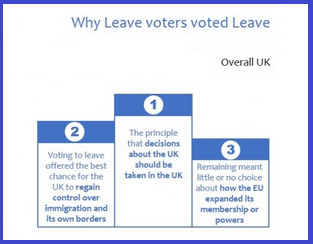
Delicious Save this on Delicious

Tax-Havens: Also A Force For Good

Far from being solely amoral, piratical facilitators of crime, kleptocracy and evasion, so-called tax-havens in fact also play a valuable role in promoting economic efficiency and curbing State-predation  

Tax havens Panama CitySo-called tax-havens have a bad reputation. In public and political minds, influenced almost wholly by the clamour of either wilfully-ignorant or Leftist-populist media and political hacks, they’re all, without exception, places solely where unsavoury associates of autocrats and plutocrats soak up the sun in between furtively stashing suitcase-loads of ill-gotten gains in anonymous numbered accounts.

As we’ve recently seen all too starkly. Because one of the main features to become glaringly obvious in the Panama Papers leaks, and in the domestic political furore in the UK which has followed it, is a self-evidently widespread inability (or possibly unwillingness) of the politico-media class and commentariat to differentiate the few truly-nefarious tax-havens from the more numerous well-run and properly-regulated offshore financial centres (OFCs) – they are decidedly not the same thing: or to distinguish illegal loot-hiding, money-laundering and tax-evasion, by corrupt despots, criminals and others, from the entirely legal use of OFCs in perfectly legitimate investment and tax-avoidance.

As so often, reality is both more complex, and more nuanced, than media-driven populist perception.

For a start, on the basic issue of definitions. The OECD lists four criteria which a territory or jurisdiction must fulfil in order to qualify as a tax-haven, as opposed to an OFC:

  1. Imposing no, or only nominal, taxes, even domestically
  2. Lack of transparency
  3. Laws and practices that discourage or even prevent automatic exchange of [tax-purposes] information with other governments on the beneficiaries of its tax regime
  4. No stipulation that the activity domiciled in its jurisdiction be substantive

On these criteria, there are relatively few true tax-havens: even the OECD lists only four, and, on its Automatic Exchange Of Information criteria, a mere two.

Tax havens Waterfront Grand CaymanMoreover, and more importantly, the vast majority of the Crown Dependency and British Overseas Territory OFCs, which Labour leader Jeremy Corbyn incorrectly labelled as tax-havens and proposed arbitrarily supplanting their democratically-elected governments to place them under direct rule from Westminster, don’t even fall into the “tax-havens” category at all.

So when no-one seriously opposes measures to prevent, detect and punish both those who undertake criminal tax-evasion, money-laundering and loot-concealment and the few residual disreputable genuine tax-havens which do facilitate them, the real objections by governments, commentators and so-called social-justice campaigners to the legitimate use of OFCs or any low-tax jurisdictions must originate from elsewhere.

Those objections arise from two principal, and unsurprising, sources. Firstly, the misunderstanding, derived from popular fallacies, of the economic good that low-tax jurisdictions promote: and secondly, the competitive threat they represent to the otherwise-unconstrained power of high-taxing, high-spending states to extract taxes from their economies and populations almost ad infinitum.

To address one of the most popular fallacies – that money deposited in OFCs or low-tax jurisdictions is somehow irretrievably “lost” to the global economy. This is just arrant nonsense.

First, it wrongly assumes there is a fixed amount of global capital whose geographical distribution creates a zero-sum game, where any partial deployment of it to Location A must automatically reduce that available in Locations B-Z. In fact global capital is both dynamic, and fungible, and continues being created in those parts of the so-called “losing” mainstream onshore economies that aren’t sensitive to geographically-differing tax rates.

Tax Havens BermudaSecond, it assumes that all capital deployed to low-tax jurisdictions stays there, static. This isn’t necessarily the case – small islands generally don’t have much potential for domestic infrastructure investment or large-scale economic activity – and it’s especially not the case in a period of low or even negative real interest rates. Although the total of assets located in an OFC may change only slowly, that ignores the stock-vs-flow issue, where many of its components parts may be being directed into other forms of investment in other locations, and subsequently repatriated, on a regular basis.

Inasmuch, too, as the location of capital and/or assets in the low-tax jurisdiction encourages their investment to generate a return not achievable if based in a higher-tax jurisdiction, the OFC is actually promoting more FDI in the investment location. In this way, the availability of low-tax OFCs makes them conducive to an increase in overall international investment and in global capital, not its depletion. They are not “poaching more than their fair share” of international capital, but acting as a conduit for its more productive and optimal investment back into mainstream onshore economies.

Third, international systems of taxation don’t always cope well with avoiding the dangers of double-taxation. If you’re an investor (and remember, you may well be, even via an ISA or your employer’s pension scheme) in a fund set up in a country that levies a withholding tax on redemption payouts, but those redemption payouts aren’t taxable domestically in your own country, then recovering the tax that’s been wrongly withheld from you is going to be difficult. By providing a tax-neutral environment, low-tax OFCs perform a valuable role in making sure that your investment, even an indirect one, isn’t taxed twice. That benefits you.

Tax havens Mossack Fonseca PanamaFourth, the fallacy assumes the “losing” country is automatically forced to raise its own domestic tax-rates to replace the tax-revenue “lost” when assets are relocated to a low-tax OFC. Countries, however, don’t operate in isolation from their international environment: lower tax-rates in other jurisdictions act as a restraint on mainstream onshore governments’ own tax-rate policies. Both firms and workers in those economies therefore benefit in purely micro-economic terms from overseas low-tax OFCs, in the form of lower taxes domestically than might be levied otherwise.

Next, low-tax OFCs also fulfil a vital function in providing a safe harbour for wealth legitimately created and held, against the tendency of inherently corrupt, dictatorial  & kleptocratic regimes to predate on it.

Depending on the definitions chosen, there are approximately 170-190 countries in the world: but only a minority are full democracies where the government is subject to the rule of law and scrutiny by a free Press. The Economist Intelligence Unit’s Democracy Index 2014 in fact lists a mere 24 as full democracies and a further 52 as flawed, out of a total of the 167 rated, leaving over 90 regimes described as either hybrid or (the majority) authoritarian. Perhaps not surprisingly, there’s a correlation between the latter categories and the Transparency International Corruptions Index 2015’s assessment of the most corrupt countries.

Most & Least Corrupt Countries 2014

These are countries where even if, against all the odds, an honest entrepreneur, investor or businessman manages legitimately to amass capital and assets, they are liable to be arbitrarily seized at any time by the regime, either unashamedly or via a quasi-criminal or complicit judiciary, and confiscated. By existing at all, low-tax OFCs furnish a safe refuge for such assets. In this role, rather than encouraging or facilitating corruption, they are in fact operating so as to thwart it.

Benefits of Tax CompetitionLastly, low-tax OFCs form a valuable macro-economic brake on the overall ability of excess-spending, excess-taxing governments to otherwise levy punitively-high taxes without restraint. In the absence of the tax-rate competition provided by lower-taxing jurisdictions, it’s unlikely that governments, viscerally-disinclined on both ideological and electoral grounds to curtail State intervention and largesse, would not take the opportunity to impose economically-damaging higher taxes generally. 

It’s primarily for this reason that the member-states of supranational political unions like the EU are so enthused by the prospect of cross-border harmonisation of taxes, or centralised democracy-proof pan-European fiscal control, as the corollary to curbing the legitimate activities of low-tax offshore financial centres. 

The vocal but unthinking critics of low-tax OFCs, in their haste to condemn what they see as the obvious, miss a point – that they are also a force for good. The existence, and legitimate activities, of low-tax OFCs both promote greater economic, capital-allocation and investment efficiency, and indirectly benefit employers, employees and consumers in the mainstream onshore economies by protecting them from excess State predation.     

Thoroughly agree with this article? Vehemently disagree with it?

Scroll down to leave a comment

Follow A Libertarian Rebel on Twitter

Delicious Save this on Delicious